
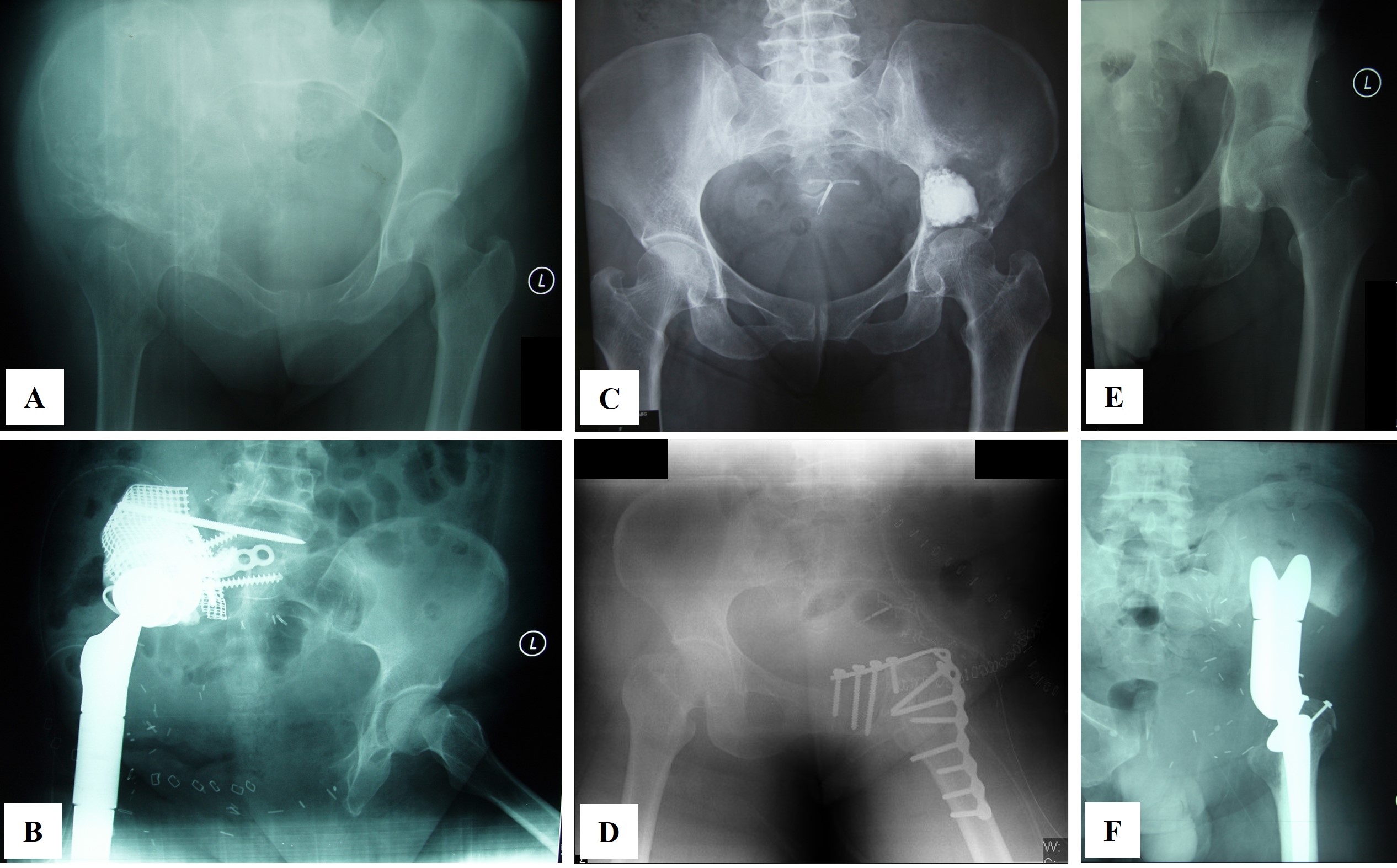
Outcomes of Hemipelvectomy for Pelvic Chondrosarcoma: A Single-Institution Case Series of 15 Patients
Chondrosarcoma Hemipelvectomy: A Case Series
Vol. 21 No. 2 : 2026 (1167-1177)
Abstract
Chondrosarcoma is a malignant bone tumour that is largely resistant to chemotherapy and radiotherapy, leaving surgery as the only effective treatment. Pelvic chondrosarcomas pose unique challenges due to anatomical complexity, delayed presentation, and the difficulty of achieving negative surgical margins. This case series reviews 15 patients treated at a tertiary referral centre over ten years, focusing on surgical outcomes and complications of limb-salvage (internal hemipelvectomy, IH) compared with hindquarter amputation (external hemipelvectomy, EH). Eleven patients underwent IH and four EH, with two requiring conversions from IH to EH due to persistent infection. The mean symptom duration was 12.3 months. Clear surgical margins were achieved in eight patients (53.3%). At a mean follow-up of 47.6 months, 10 patients were alive, with eight of them being disease-free. Complications were universal, with wound infection being the most frequent (13 of 15 patients). Functional outcomes, measured by Musculoskeletal Tumor Society scores, were highly variable (final mean: 59.6%, range 6.7-100). Time to first ambulation tended to be longer for EH patients. While IH can yield good function, it carries a high risk of major complications. EH provides definitive control in complex cases but results in profound functional impairment. Careful patient selection is paramount in managing this difficult disease.
Keywords :
Chondrosarcoma; hemipelvectomy; pelvic neoplasms; postoperative complications; surgical margins,
Correspondance Address
*Correspondence: ariffsharifudin@unisza.edu.my / dr.ariff.s@gmail.com


