Intraocular Pressure, Intracranial Pressure, Translaminar Pressure Difference and Related Factors in Primary Open Angle Glaucoma
Actors Affecting in Primary Open Angle Glaucoma
Vol. 21 No. 1 : 2026 (175-190)

Abstract
This study aims to investigate and compare the relationship between intracranial pressure (ICP), intraocular pressure (IOP) and translaminar pressure difference (TLPD) in high-tension glaucoma (HTG) patients and healthy individuals. Newly diagnosed HTG patients and healthy subjects without ocular comorbidities were recruited. All participants underwent blood pressure, heart rate, body weight, height and comprehensive ocular examinations, including best-corrected visual acuity, IOP measurement, optic nerve head assessment, peripapillary retinal nerve fibre layer and macular imaging, visual field testing, axial length and central corneal thickness measurements. ICP was estimated using the formula:
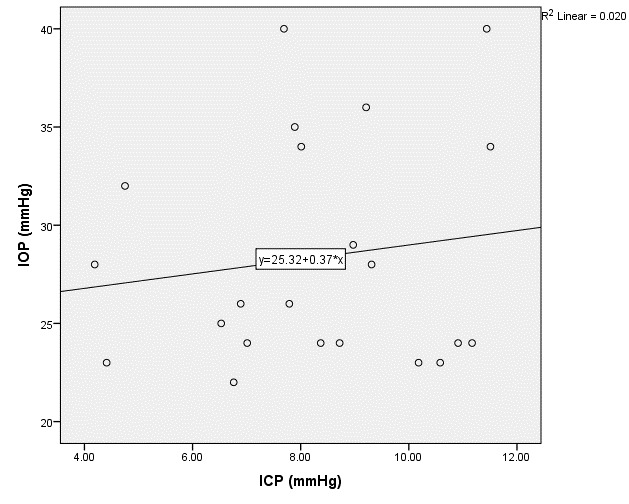
Cerebrospinal fluid pressure (mmHg) = (0.44×x Body Mass Index (kg/m2)) + (0.16 x× Diastolic Blood Pressure (mmHg))-(0.18 x Age (years)) - 1.91. TLPD was calculated by subtracting the estimated ICP from the IOP. Compared to healthy subjects, HTG patients had significantly higher median IOP [26.00 (24.00-34.00) mmHg vs. 13.00 (10.00-14.00) mmHg], lower median ICP [8.19 (6.86-10.28) mmHg vs. 11.31 (8.91-12.36) mmHg], and higher median TLPD [18.64 (15.27-26.19) mmHg vs. 1.72 (0.27-4.62) mmHg]. There was no correlation between IOP and ICP; however, IOP was significantly correlated with TLPD in both groups, HTG (r = 0.911, p < 0.001) and non-glaucomatous (r = 0.758, p < 0.001). In healthy subjects, TLPD was moderately and negatively correlated with ICP (r = -0.525, p = 0.012). The lower ICP observed in HTG patients suggests that ICP may be associated with the development of glaucoma. Further research is needed to explore the impact of ICP on glaucoma progression and disease management.
Keywords :
Cerebrospinal fluid pressure; glaucoma; intracranial pressure; intraocular pressure; primary open angle glaucoma; translaminar pressure difference,
Correspondance Address
Jemaima Che-Hamzah. Department of Ophthalmology, Faculty of Medicine, Universiti Kebangsaan Malaysia, Jalan Yaacob Latif, Bandar Tun Razak, 56000 Cheras, Kuala Lumpur, Malaysia. Tel: +603-91455984 E-mail: jemaima@hctm.ukm.edu.my