
Defying All Odds: Successful Thrombolysis in a Nonagenarian with Posterior Circulation Infarct
Thrombolysis in Elderly
Vol. 20 No. 1 : 2025 (384-389)
Abstract
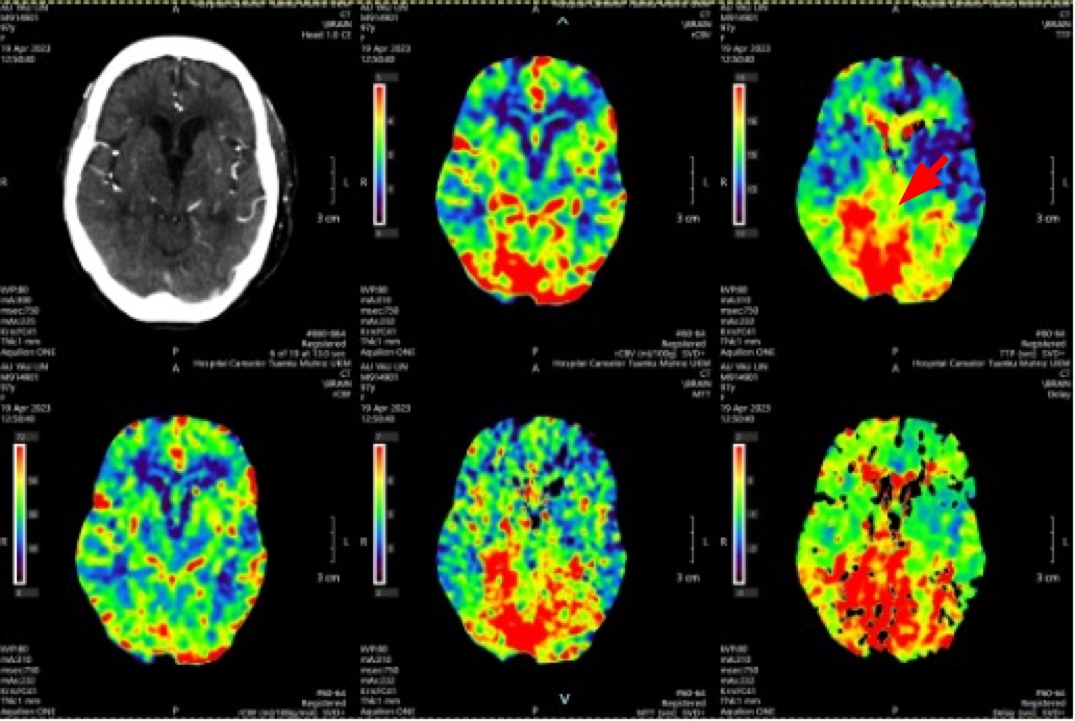
A delay in recognising acute posterior circulation infarct (POCI) can cause a delay in treatment and high mortality rate. There has been an increasing trend in incidence of stroke among the elderly. Treating acute stroke in elderly has been challenging due to the lack of data on the functional outcome and mortality risk. A 97-year-old woman had left sided weakness upon waking up from sleep and dizziness two days prior. Upon arrival, her Glasgow Coma Scale (GCS) was E3V4M6, BP 162/112 mmHg, NIHSS score 10, left sided power 3/5 and right sided power 4/5. Her computed tomography (CT) angiography brain showed P2 segment of right posterior cerebral artery and distal basilar artery thrombosis, with a posterior circulation territory mismatch. Thrombolysis was given immediately. She was discharged with NIHSS 5, GCS E4V5M6 and power bilateral limbs 4/5. She was put on lifelong Apixaban for stroke prevention and underwent post-stroke rehabilitation. The time of occlusion was decided based on the time a patient was last seen well. Studies have shown that patients aged 80 years and above presenting within 3-4.5 hours from symptoms, perform well with both intravenous thrombolysis and thrombectomy, with no increased risk for intracranial hemorrhage and death.
Keywords :
Dizziness; elderly; NIHSS; posterior circulation infarct; thrombolysis,
Correspondance Address
Dr Wan Asyraf Wan Zaidi. Neurology Unit, Department of Medicine, Level 8, Clinical Block, Hospital Canselor Tuanku Muhriz, Jalan Yaacob Latif, Bandar Tun Razak, 56000 Cheras Kuala Lumpur, Malaysia. Tel: +6013-3884836 Email: drwawz87@gmail.com


