Association between Confidence in Performing Direct Ophthalmoscopy and Retinoscopy with Eye and Hand Dominance: A Cross-sectional Survey Study
Self-Confidence with Ophthalmoscopy and Retinoscopy
Vol. 21 No. 2 : 2026 (832-843)

Abstract
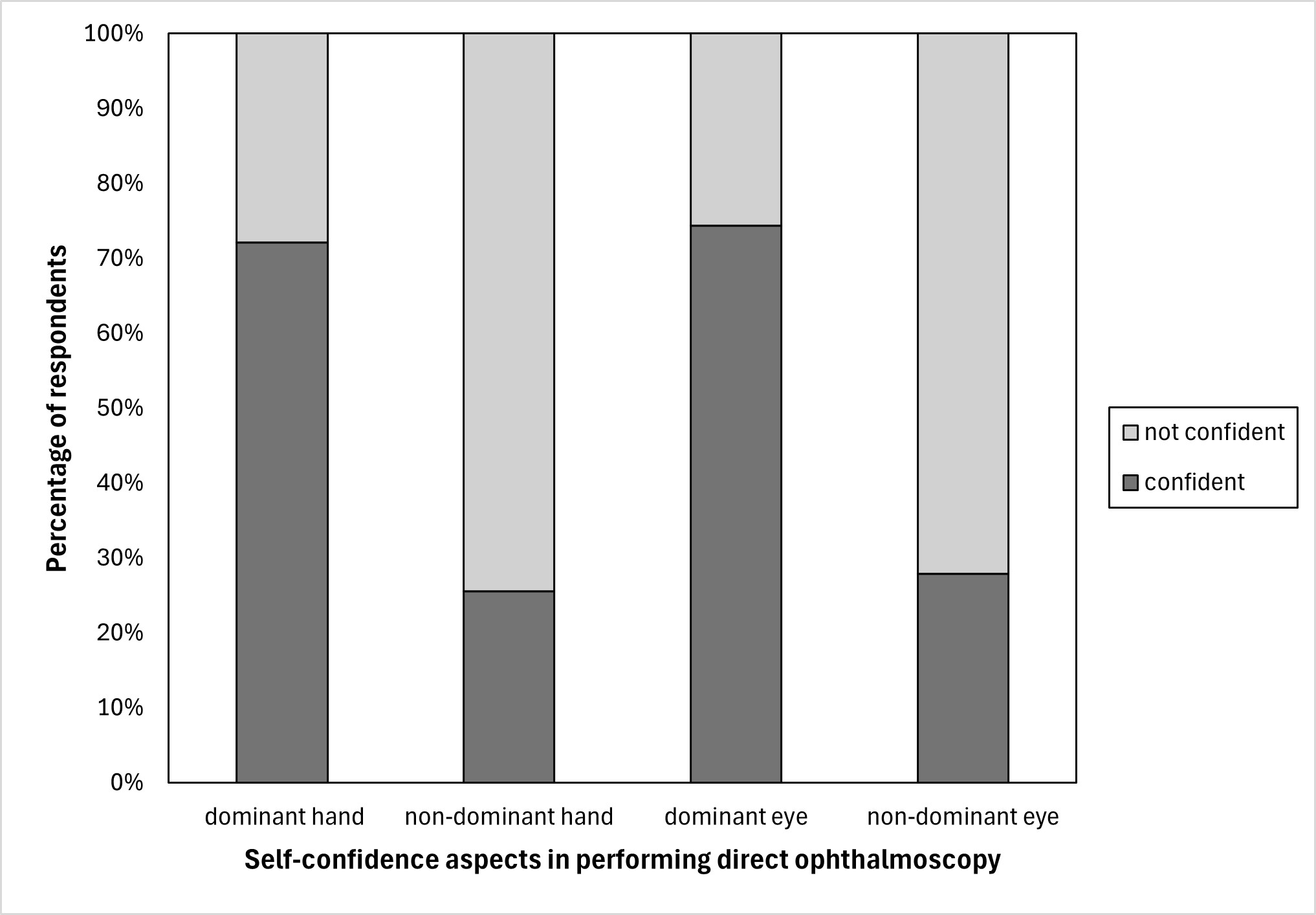
Direct ophthalmoscopy and retinoscopy are essential clinical skills in optometry training that must be mastered before students progress into their clinical year. Thus, assessing their confidence in these skills’ acquisition is crucial as they require both cognitive understanding and practical proficiency. The purpose of this study was to determine the confidence of preclinical year optometry students in performing direct ophthalmoscopy and retinoscopy, with consideration of eye and hand dominancy. The participants consisted of students enrolled in the undergraduate optometry program in their preclinical year. Confidence levels in performing direct ophthalmoscopy and retinoscopy were assessed using validated questionnaires. Confidence in direct ophthalmoscopy was higher when performed with the dominant eye (72.1%) compared to the non-dominant eye (25.6%), and with the dominant hand (74.4%) compared to the non-dominant hand (27.9%). There were highly significant associations between confidence in direct ophthalmoscopy and both hand dominancy (χ2(1) = 18.615, p < 0.001) and eye dominancy (χ2(1) = 18.615, p < 0.001). Similarly, a low proportion of students reported confidence when retinoscopy was performed with their non-dominant eye (28%) and dominant hand (22%), with highly significant associations between confidence level and hand dominancy (χ2(1) = 17.993, p < 0.001) and eye dominancy (χ2(1) = 14.492, p < 0.001). Fewer than 50% of students were confident in discriminating retinoscopy reflexes associated with astigmatism. In conclusion, a large proportion of preclinical students lacked confidence in performing direct ophthalmoscopy and retinoscopy using their non-dominant hand and eye. Clinical teaching should nurture ambidexterity among preclinical students to enhance confidence in performing these crucial clinical skills.
Keywords :
Clinical skills; confidence; direct ophthalmoscopy; eye dominance; hand dominance; retinoscopy,
Correspondance Address
*Correspondence: izzuddin.hairol@ukm.edu.my